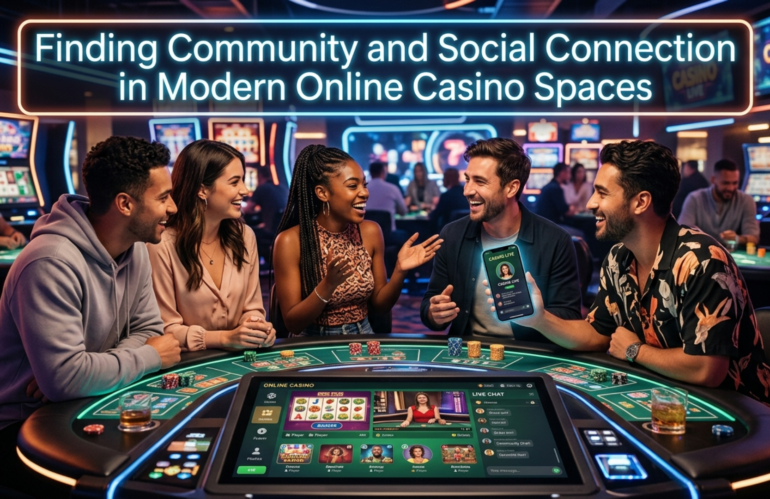
A large part of the current loneliness studies indicates a very basic trend: individuals seek belonging in the places they already frequent. When they are online, community is created in spaces that are not thought of by outsiders as social in any way. One of such corners is online casino platforms, which are influenced by psychology as much as by entertainment, and are becoming more and more researched in terms of their ability to address the daily emotional needs.
Researchers studying digital behavior in India describe this as a quiet form of low-stakes social anchoring. Users from India in the IN market who explore the Pinkybet casino official website and visit Pinky Bet online point out familiar steps – registration, sign in, or a routine login on the Pinkybet online casino – carry a social meaning that reaches further than the gameplay itself.
Why Online Casino Spaces Became Informal Community Hubs
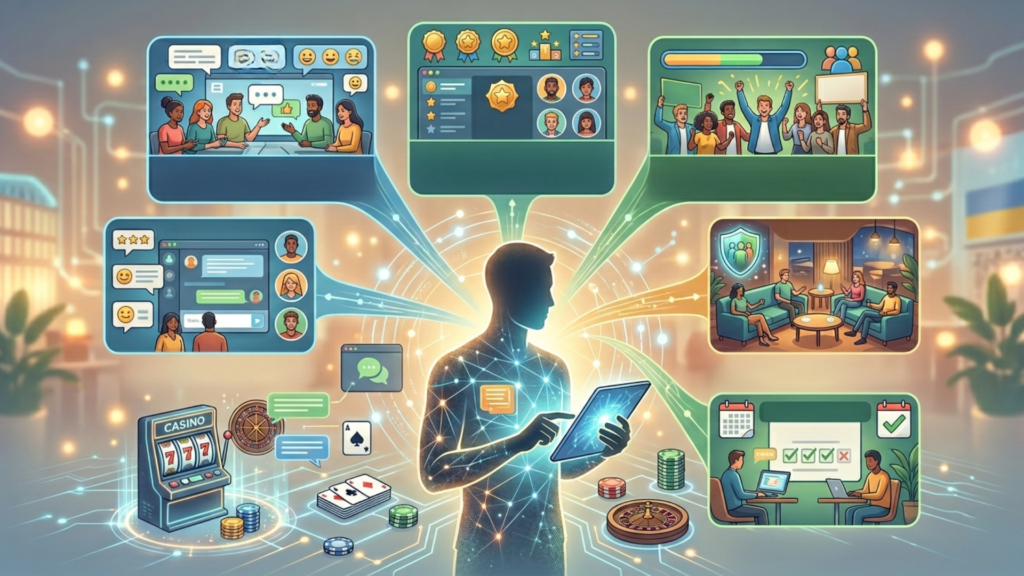
These platforms were forced into community territory by three forces. To start with, live chat was introduced as a standard feature in most games, that is, players started chatting between sessions as regulars do in a local cafe. Second, the tournaments and planned events provided a regular meeting point, and the same nicknames appeared every week.
Third, mobile access leveled the previous distinction between going somewhere to play and playing where life takes place. Players can now immerse themselves in the same platform on a commute, lunch break or a quiet evening at home. It is that repetition that makes a casual app more of a shared social space.
Friendships and family contact are not substituted by the social layer. It sits next to them, providing what sociologists occasionally refer to as weak-tie interaction, the type of short-term, friendly interaction that is conducive to mental well-being and does not require much on either side.
The Psychological Needs Behind Digital Belonging
The appeal makes more sense once the underlying needs are named. According to the American Psychological Association, a sense of belonging is one of the strongest predictors of daily well-being, and it does not require deep relationships to register — even routine, low-intensity contact can help.
Online casino spaces happen to deliver several of those low-intensity signals at once:
- Recognition. Being greeted by name, or by familiar avatars, triggers a mild but real sense of mattering.
- Predictability. Knowing which games run at which hours gives structure to an otherwise shapeless evening.
- Shared attention. Watching the same tournament unfold with strangers who are watching it too is a classic form of co-presence.
- Low-pressure presence. Nobody is required to speak, which suits users who want contact without performance.
To individuals who have to cope with isolation, shift work, grief, or social anxiety, the combination of the four can have a tangible emotional impact. This does not turn the platform into an alternative to therapy or support groups, but it does justify why so many users say that they feel like they are surrounded by people when they log in.
Ritual, Routine, and Emotional Regulation
Small daily rituals are a grounding tool that therapists usually prescribe. A morning stroll, a regular coffee order, a regular phone call – any repetitive, predictable action that indicates that the day is in progress.
Evening sessions are characterized in the same way by returning players. The recognizable interface, the games that are selected by default, the chatting with the regulars, all these elements are like a reminder that the day is coming to an end. The psychology remains the same whether the ritual is a mug of tea or a familiar game lobby.
It is the regulatory effect that is important, rather than the activity. Rituals assist the brain in switching between states and digital environments have begun to assume that role to a generation that has been raised within them.
Cross-Border Casino Player Networks and Shared Digital Spaces

Community on these sites seldom remains within a single country. The common games, common chats, and almost identical interfaces create networks that silently traverse borders, which is one of the reasons why researchers have begun to treat them as miniature case studies of online social behavior.
A parallel pattern has been observed in the United Kingdom, where consumer research has looked at how online platforms function as soft social networks. UK users of the Astrozino casino official website note that Astrozino has registration, sign in, and a simple login on the Astro Zino online casino steps – small details that quietly support the sense of belonging returning players describe.
These cross-border dynamics are important to psychology in that they indicate that belonging is not geographical. A user in Manchester and a user in Mumbai can have the same evening rhythm, the same familiar nicknames and walk away the screen with a similar feeling that the evening was not spent alone completely.
Recognizing Healthy Engagement vs. Emotional Over-Reliance
Any area that satisfies emotional needs can also be overused as well. It is no less true of a favorite cafe than it is of a gaming platform, but the latter should be given more definite consideration since the access is unlimited.
Healthy engagement usually looks like this:
- Sessions have a natural stopping point, often set in advance.
- The platform supplements offline contact rather than replacing it.
- The user walks away feeling rested, not drained.
- Financial choices stay inside pre-decided limits.
Warning signs look different:
- Logging in becomes the default response to stress, sadness, or boredom.
- Offline relationships start feeling harder to keep up with.
- Time spent on the platform keeps expanding without deliberate choice.
- Spending patterns become difficult to describe honestly to others.
Clinicians in the field of digital well-being are more likely to emphasize self-monitoring as opposed to rigid rules, since the objective is not abstinence but awareness. An individual that observes the initial signs finds it a lot easier to re-adjust compared to an individual who waits to experience a crisis.
A Quieter Form of Togetherness in a Hyper-Digital Era
None of this makes online casino spaces emotional support systems and no one in the field takes it seriously. What it does reveal is that human beings seek a sense of belonging in any environment that they are in and modern environments are too digital.
It is the truth that it is the truth to be able to perceive reality without judgment. Humans desire to feel acknowledged, to have a familiar place to go back to, and to have silent companionship with others – and they will get those emotions wherever the architecture may provide them. One of these architectures is online gaming lobbies, and to consider them as games is to overlook what many users are really there to: a soft, steady kind of company that demands little and yet, somehow, delivers.